UdyamGita

The Gita Blueprint for Leading and Winning in Business

UdyamGita

Arjuna Viṣhāda Yoga

Chapter 1 - Verse 20,21
अथ व्यवस्थितान्दृष्ट्वा धार्तराष्ट्रान् कपिध्वज: |
प्रवृत्ते शस्त्रसम्पाते धनुरुद्यम्य पाण्डव: ||20||
हृषीकेशं तदा वाक्यमिदमाह महीपते |
अर्जुन उवाच |
सेनयोरुभयोर्मध्ये रथं स्थापय मेऽच्युत || 21||

Translation

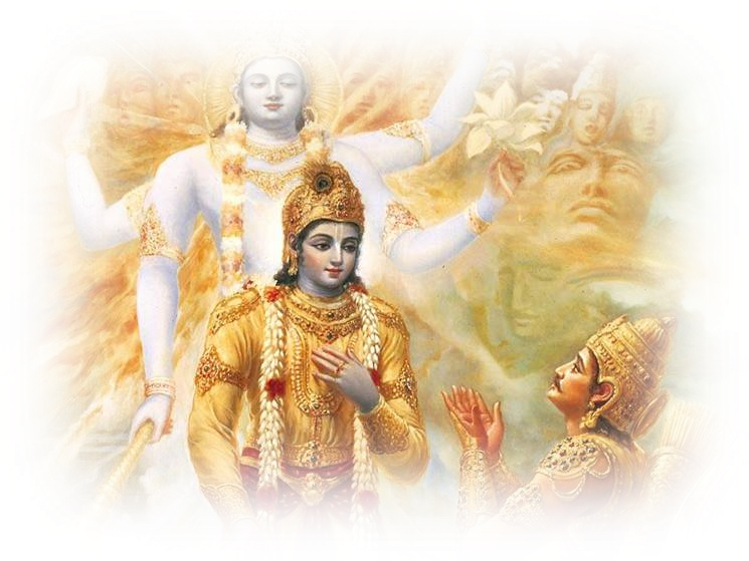
Looking at King Dhrutarashtra’s children who were ready to wage
the war, Arjuna, (the one whose chariot bears the flag of Lord Hanuman),
just when the time had come to operate the weapons, held up his bow, and
spoke to Lord Krishna as follows.
Arjuna said: O Achyuta! Please position my chariot in between the
two armies

Unfiltered First Take

Special mention of Kapil Dhwaja (insignia) and Hrishikesh tells us that from time to time we should keep reminding ourselves of the unmatched advantages we have, and also explicitly talk about them so that the team and the ecosystem around us believe in it too. When this happens, positive support systems align in your favour.

Here, though Krishna is Arjuna’s sarathi, Arjuna calls him Achyuta. Arjuna gives Krishna his due respect even though Krishna has taken up the role of a sarathi. Do not treat people based on the roles they play or the job they take up to complete the task at hand. Understand their potential and intent, and respect them so that you get their wholehearted support in fulfilling your goals.

From Krishna’s perspective, he has stepped down as a sarathi even though he is a world class warrior himself. There was a dire need for a good sarathi for Arjuna, someone who could match his potential, understand his psychological state, and guide him whenever needed. Krishna filled this gap by becoming his sarathi.

If you have to step down and take up a smaller role to fill a gap and complete a task, take it up gladly. When you take up that role, give your best. From that position, create the maximum impact possible. Many times, you may not be able to create that level of impact from a higher role.

Krishna was not supposed to take an active role in the war. This appears to be a clear disadvantage, but he converted it into the greatest possible advantage by being Arjuna’s sarathi. If Krishna had been fighting in the war, would he have been able to guide Arjuna the way he did? By staying away from direct combat, he kept a larger view of the war and handled it strategically in a far better way.

In business as well, when something adverse happens, make sure you convert it into your benefit. A classic example of this is negative marketing. Many businesses have grown multifold by using this approach.

Krishna kept himself away from the actual war and limited his physical involvement to being a sarathi. This highlights an important lesson. To work strategically, one must keep some distance from active participation in day to day activities. Constant involvement in execution drains energy and prevents you from seeing the bigger picture and making strategic moves.

UdyamGita Interpretation

As the armies stand face to face, Arjuna lifts his bow. Sanjaya deliberately highlights two details: the Kapila Dhwaja—the flag bearing Hanuman—and Arjuna’s address to Hrishikesh.

Though Krishna stands as Arjuna’s charioteer, Arjuna addresses him as Achyuta—the infallible one. He then requests Krishna to place the chariot between the two armies, seeking clarity before action.

This moment is not tactical alone; it is deeply symbolic.

Business Insight

The repeated emphasis on the insignia, names, and associations is intentional. They are reminders—both to oneself and to the ecosystem—of unmatched advantages already in place.

In business, leaders must consciously reinforce their strengths: brand credibility, advisory backing, culture, values, or strategic partnerships. When these advantages are explicitly acknowledged, belief aligns—not just internally, but externally as well. Confidence attracts support.

Equally important is Arjuna’s choice of address. Though Krishna has stepped into an operational role, Arjuna does not reduce him to that function. He respects Krishna’s role, but reveres his potential and intent.

Organizations fail when people are treated strictly by titles rather than by capability. Respect unlocks discretionary effort—and that effort often makes the difference between average and exceptional outcomes.

Leadership Lesson

From Krishna’s perspective, the lesson is even deeper.

Krishna voluntarily steps down from being an active warrior—a role where he is unmatched—to become a Sarathi. Why? Because the war does not need another fighter; it needs strategic clarity, emotional balance, and guidance for Arjuna.

Great leaders fill the gap the mission demands, not the role their ego prefers.

By staying out of direct combat, Krishna preserves his ability to see the larger picture, intervene at critical moments, and guide outcomes strategically. Had he been absorbed in daily combat, this leverage would have been lost.

In business, leaders who remain trapped in day-to-day execution often lose strategic altitude. Sometimes, stepping into a “smaller” role creates disproportionately larger impact.

Even constraints can become advantages. Krishna turns a limitation—his vow not to fight—into the greatest strategic edge of the war.

Key Takeaways

  • Reinforce your strengths consciously: Remind yourself and others of the advantages you carry.
  • Respect people beyond roles: Titles don’t define potential; intent and capability do.
  • Step down to step up strategically: The right role is the one the mission needs most.
  • Convert constraints into advantages: Limitations can unlock new leverage points.
  • Protect strategic bandwidth: Staying out of daily firefighting enables bigger-picture leadership.

Comments & Reviews

Share Your Thoughts

Comments (0)

No comments yet. Be the first to share your thoughts!

Share this Verse