UdyamGita

The Gita Blueprint for Leading and Winning in Business

UdyamGita

Vibhūti Yoga

Chapter 10 - Verse 1,2,3
श्रीभगवानुवाच |
भूय एव महाबाहो शृणु मे परमं वच: |
यत्तेऽहं प्रीयमाणाय वक्ष्यामि हितकाम्यया || 1||
न मे विदु: सुरगणा: प्रभवं न महर्षय: |
अहमादिर्हि देवानां महर्षीणां च सर्वश: || 2||
यो मामजमनादिं च वेत्ति लोकमहेश्वरम् |
असम्मूढ: स मर्त्येषु सर्वपापै: प्रमुच्यते || 3||

Translation

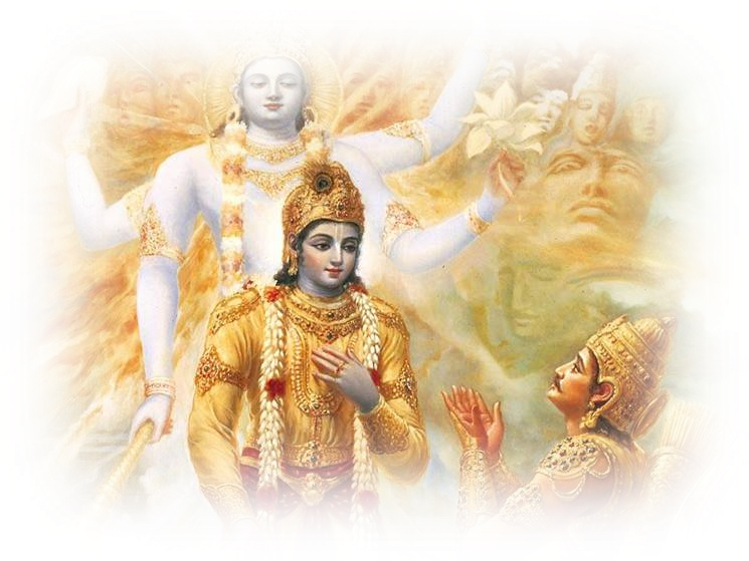
The Lord said: O Arjuna, Mighty Armed One! Listen to some more
of My paramount qualities. I will speak unto you for your welfare as you
will delight in them.

Even groups of deities and great sages do not have complete
knowledge of My paramount qualities or about the creation of this
universe. I am the reason for the existence of all deities, all sages and
indeed every being, and I am beginningless.

One who knows Me as eternal, is not subject to birth. The controller
and activator of everything and everyone, the root cause for the existence
of the universe, and the Supreme Leader is never deluded. Such a person
will be freed from all sins.

Unfiltered First Take

No one truly knows what makes a person pursue entrepreneurship. What qualities should be taught, and at what age, similar to academic subjects and structured plans, to ensure that one will take up entrepreneurship and succeed in it? What kind of learning inspires a person to attract others, make them join the journey, help achieve the goal, and become part of the organizational leadership team? No one knows whether entrepreneurship is an inborn quality or an acquired one. If it is acquired, then when and how does this acquisition happen?

If one truly understands entrepreneurship, it becomes clear that it is very rare and that there is no proven approach or fixed path to take it up and be successful. Anyone can choose entrepreneurship at any point in time, acquire relevant knowledge, and move forward on this path. When one realizes that entrepreneurship cannot be taught, but that skills and knowledge must be acquired by oneself, the focus shifts to executing the task at hand rather than worrying about gaps in past learning. Since there is no fixed path, individuals feel free to try different ways of running their business. Entrepreneurship is always forward looking rather than spending time thinking about the past. Once this realization sets in, one becomes free from the wrong assumptions and theoretical reasoning developed about entrepreneurship.

UdyamGita Interpretation

Krishna begins this chapter with warmth and intent. He asks Arjuna to listen once more—not because Arjuna failed to understand earlier, but because the truth being shared is subtle, rare, and transformative. Even the gods and sages, symbols of ultimate knowledge, cannot fully grasp Krishna’s origin. He is beginningless, the source itself. One who understands this is no longer confused by appearances and is freed from illusion.

At its core, these verses dismantle the human urge to find neat origins, fixed formulas, and predictable pathways.

Business Insight

Entrepreneurship mirrors this mystery.

No one truly knows what makes someone an entrepreneur.

Is it innate or acquired?

If acquired, when, how, and through what curriculum?

There is no academic syllabus that guarantees entrepreneurship. No age, degree, background, or predefined “track” that ensures success. Even those who inspire others, build leadership teams, and create enduring organizations cannot fully explain how they became who they are.

The moment an aspiring founder realizes this truth—that there is no proven, universal path to entrepreneurship—a profound shift occurs. The anxiety of “missing something in the past” dissolves. The search for a perfect starting point ends.

Entrepreneurship reveals itself not as a destination one qualifies for, but as a path one chooses to walk—at any stage of life, with whatever resources and knowledge one currently has.

Leadership Lesson

Great founders are not trapped by origin stories—neither their own nor others’.

When leaders accept that entrepreneurship cannot be taught in the conventional sense, they stop obsessing over credentials and pedigree. Instead, they cultivate self-acquired skills, continuous learning, and relentless execution.

This realization liberates leadership thinking:

  • From rigid theories
  • From borrowed frameworks
  • From regret about past gaps

Freed from these illusions, leaders become experimental, adaptive, and forward-looking. They focus less on why they didn’t start earlier and more on how to execute better now.

True entrepreneurial leadership, like Krishna’s wisdom, is not about tracing beginnings—it is about owning responsibility in the present.

Key Takeaways

  • Entrepreneurship has no fixed origin story—neither innate nor fully teachable.
  • There is no universal syllabus or age for becoming a founder.
  • Freedom begins when founders stop worrying about past gaps and start executing in the present.
  • Entrepreneurship is forward-looking by nature; obsession with the past weakens momentum.
  • Let go of rigid theories—experimentation is the real teacher.

Comments & Reviews

Share Your Thoughts

Comments (0)

No comments yet. Be the first to share your thoughts!

Share this Verse