UdyamGita

The Gita Blueprint for Leading and Winning in Business

UdyamGita

Kṣhetra Kṣhetrajña Vibhāga Yoga

Chapter 13 - Verse 17
अविभक्तं च भूतेषु विभक्तमिव च स्थितम् |
भूतभर्तृ च तज्ज्ञेयं ग्रसिष्णु प्रभविष्णु च || 17||

Translation

It resides in different beings in an undivided form but appears to
have different forms. It holds and supports all beings. It pervades
everywhere and fills everything. It is known at all times. It consumes
everything (at the time of dissolution of the universe) and creates
everything (at the time of creation of the universe).

Unfiltered First Take

As the organization grows, he may not be visible to all employees due to his busy schedule and the responsibilities he carries as a business owner. However, the culture should be built in such a way that everyone can visualize his approach to the tasks they are doing and act accordingly. Without being physically present, if he can drive people as if he is guiding and directing them personally, he has covered half of his path.

An entrepreneur is the one who comes up with new ideas, approaches, and initiatives, and engages the right people and resources in them. He should also keep an eye on ongoing tasks or initiatives that are not yielding the desired results and evaluate whether to fix the problems or stop them completely. For ongoing activities, he should know the right interventions needed to make them more productive and effective. In short, he should know which ideas to take up as new initiatives, which to terminate, which to continue, and whether any interventions are needed.

UdyamGita Interpretation

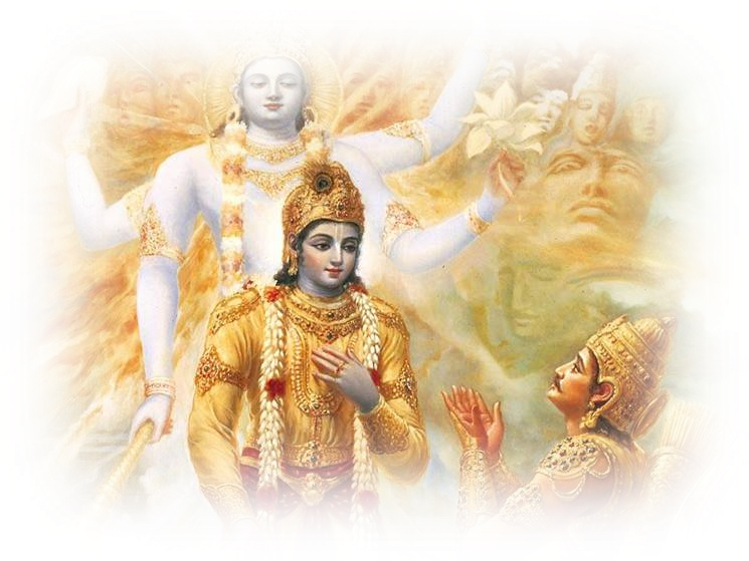
Krishna presents another profound paradox. The Supreme Reality is indivisible, yet appears divided among countless beings. It is simultaneously the sustainer, the creator, and the annihilator.

This verse describes one intelligence operating through many forms, continuously deciding what must be born, what must be nurtured, and what must be dissolved.

Business Insight

As organizations grow, founders naturally become less visible to every individual employee. Physical absence, however, must not translate into directional absence.

A mature organization is one where:

  • Employees can anticipate the founder’s thinking while executing their tasks.
  • Culture acts as a silent guide, shaping daily decisions.
  • People work as if the founder were personally guiding them—even when he is not.

Reaching this stage means the founder has successfully embedded vision into the system.

Leadership Lesson

Krishna’s triad—creator, sustainer, destroyer—maps directly to the entrepreneur’s most critical responsibility.

An entrepreneur must continuously decide:

  • What new ideas and initiatives to create
  • Which ongoing activities to sustain and strengthen
  • What to correct, pivot, or completely shut down

Leadership is not only about starting things. It is equally about ending what no longer serves the vision. Indecision here leads to resource drain and cultural confusion.

Founders who master this balance free the organization from emotional attachment to projects and keep it aligned with purpose.

Key Takeaways

  • Founder presence must be embedded in culture, not limited to visibility.
  • Teams should act with clarity even in the leader’s absence.
  • Entrepreneurs must consciously play all three roles: creator, sustainer, and terminator.
  • Stopping the wrong initiative is as valuable as starting the right one.
  • Organizational maturity begins when vision drives action without supervision.

Comments & Reviews

Share Your Thoughts

Comments (0)

No comments yet. Be the first to share your thoughts!

Share this Verse