UdyamGita

The Gita Blueprint for Leading and Winning in Business

UdyamGita

Sankhya Yoga

Chapter 2 - Verse 16,17,18,19,20,21
नासतो विद्यते भावो नाभावो विद्यते सत: |
उभयोरपि दृष्टोऽन्तस्त्वनयोस्तत्त्वदर्शिभि: || 16||
अविनाशि तु तद्विद्धि येन सर्वमिदं ततम् |
विनाशमव्ययस्यास्य न कश्चित्कर्तुमर्हति || 17||
अन्तवन्त इमे देहा नित्यस्योक्ता: शरीरिण: |
अनाशिनोऽप्रमेयस्य तस्माद्युध्यस्व भारत || 18||
य एनं वेत्ति हन्तारं यश्चैनं मन्यते हतम् |
उभौ तौ न विजानीतो नायं हन्ति न हन्यते || 19||
न जायते म्रियते वा कदाचि
नायं भूत्वा भविता वा न भूय: |
अजो नित्य: शाश्वतोऽयं पुराणो
न हन्यते हन्यमाने शरीरे || 20||
वेदाविनाशिनं नित्यं य एनमजमव्ययम् |
कथं स पुरुष: पार्थ कं घातयति हन्ति कम् || 21||

Translation

No good comes out of bad deeds. Also, there are no bad results from
good deeds. The learned seers who have realized the Lord Almighty are
convinced of these two facts.

Know that entities that pervade the universe will not perish. No one
can cause destruction to the imperishable.

O Bharata! It is said that the eternal soul’s visible physical body is
perishable, but the Lord Almighty, the Supreme Soul, is imperishable (not
subject to four-way destruction). Hence, fight this war as worship to the
indwelling Lord Aprameya, the one who is not limited by space, time, or
attributes.

One who thinks that one person has killed another person and the
one who thinks that the second person has been killed - neither has true
knowledge. No one can kill anyone else, and no one can be killed.

The soul is not subject to birth and death; it is eternal. It is not that
the soul did not exist earlier and was born. It has no birth as it is eternal,
and it is not subject to decay. Even when the physical body is destroyed,
the soul does not perish.

O Partha! One who knows that the soul is eternal, that it does not
perish, that it has no birth or death; how can that person cause death to
someone and/or kill someone.

Unfiltered First Take

A strong business vision never dies, but to attain that vision, a business may have to undergo tremendous transformations. This may include shutting down a few divisions, letting go of people, changing partners, and vendors. As a business owner, one should not worry about the tough work that comes as part of attaining the vision, because the vision itself will not get destroyed due to these transformations. The owner should not consider these actions as a downfall or the death of the organization.

The spirit of entrepreneurship never dies. Even when an organization transforms into something completely new, it does not mean that the original spirit of the organization has died. The spirit always remains. Only the format through which this spirit operates may change.

UdyamGita Interpretation

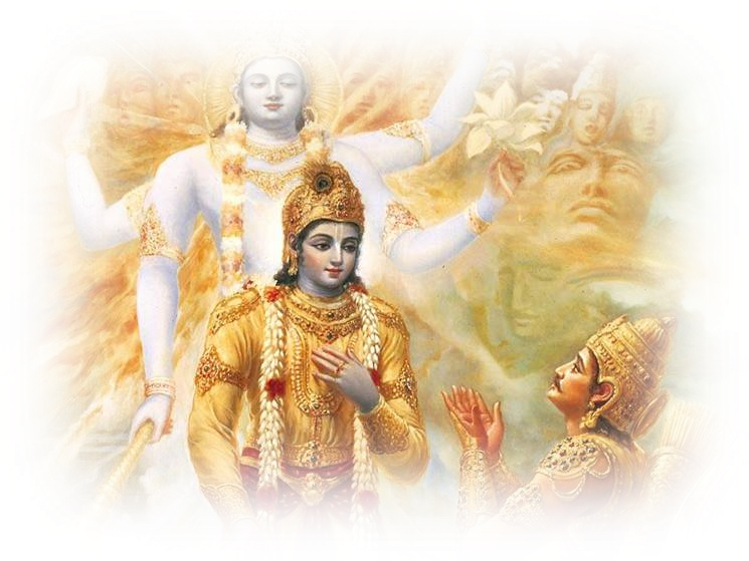
Krishna now draws the sharpest philosophical boundary in the Gita—between what is temporary and what is eternal.

He declares that the unreal has no permanence, and the real never ceases. Bodies perish; the indwelling essence does not. What appears as destruction is only change of form, not annihilation of truth.

Krishna’s conclusion is decisive: since only the body is perishable and the essence is indestructible, action must not be paralysed by fear of loss. This is the intellectual foundation on which fearless action stands.


Business Insight

Strong visions never die—only their expressions change.

In business, the form of the organization will inevitably undergo destruction and rebirth:

  • Divisions may shut down
  • People may exit
  • Partners and vendors may change
  • Products and markets may pivot

These are not signs of decline—they are mechanisms of survival and growth.

A founder who mistakes structural change for organizational death will resist transformation. But the core vision—the reason the business exists—remains intact if it is authentic.

Transformation is not betrayal of vision; it is often the only way to protect it.


Leadership Lesson

Krishna reframes difficult decisions as non-lethal to purpose.

Letting go of people, discontinuing businesses, or exiting markets feels like destruction—but it is not. What dies is only a container, not the consciousness driving the enterprise.

Leaders who understand this:

  • Act without excessive guilt
  • Take tough calls without moral paralysis
  • Separate compassion from indecision

Entrepreneurship itself is eternal. Organizations may dissolve, merge, or reinvent—but the entrepreneurial spirit does not perish. It simply finds a new operating form.


Key Takeaways

  • Vision is eternal; structures are temporary
  • Transformation is not death—it is renewal
  • Tough decisions don’t destroy purpose
  • Do not confuse change with failure
  • Entrepreneurial spirit outlives organizations
  • Fearless action comes from clarity of essence
Comments & Reviews

Share Your Thoughts

Comments (0)

No comments yet. Be the first to share your thoughts!

Share this Verse