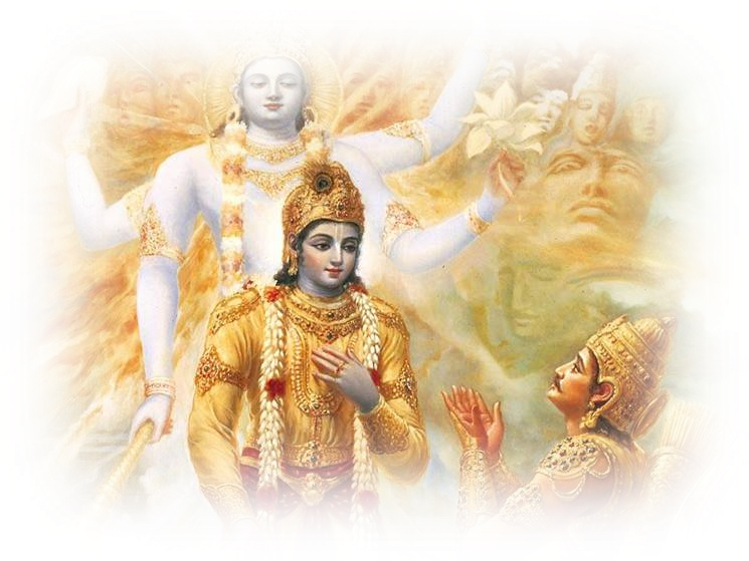
UdyamGita

The Gita Blueprint for Leading and Winning in Business

UdyamGita

Sankhya Yoga

Chapter 2 - Verse 22,23,24,25,26,27,28,29,30,31,32,33,34,35,36,37,38
वासांसि जीर्णानि यथा विहाय
नवानि गृह्णाति नरोऽपराणि |
तथा शरीराणि विहाय जीर्णा
न्यन्यानि संयाति नवानि देही || 22||
नैनं छिन्दन्ति शस्त्राणि नैनं दहति पावक: |
न चैनं क्लेदयन्त्यापो न शोषयति मारुत: || 23||
अच्छेद्योऽयमदाह्योऽयमक्लेद्योऽशोष्य एव च |
नित्य: सर्वगत: स्थाणुरचलोऽयं सनातन: || 24||
अव्यक्तोऽयमचिन्त्योऽयमविकार्योऽयमुच्यते |
तस्मादेवं विदित्वैनं नानुशोचितुमर्हसि || 25||
अथ चैनं नित्यजातं नित्यं वा मन्यसे मृतम् |
तथापि त्वं महाबाहो नैवं शोचितुमर्हसि || 26||
जातस्य हि ध्रुवो मृत्युर्ध्रुवं जन्म मृतस्य च |
तस्मादपरिहार्येऽर्थे न त्वं शोचितुमर्हसि || 27||
अव्यक्तादीनि भूतानि व्यक्तमध्यानि भारत |
अव्यक्तनिधनान्येव तत्र का परिदेवना || 28||
आश्चर्यवत्पश्यति कश्चिदेन
माश्चर्यवद्वदति तथैव चान्य: |
आश्चर्यवच्चैनमन्य: शृ्णोति
श्रुत्वाप्येनं वेद न चैव कश्चित् || 29||
देही नित्यमवध्योऽयं देहे सर्वस्य भारत |
तस्मात्सर्वाणि भूतानि न त्वं शोचितुमर्हसि || 30||
स्वधर्ममपि चावेक्ष्य न विकम्पितुमर्हसि |
धर्म्याद्धि युद्धाच्छ्रेयोऽन्यत्क्षत्रियस्य न विद्यते || 31||
यदृच्छया चोपपन्नं स्वर्गद्वारमपावृतम् |
सुखिन: क्षत्रिया: पार्थ लभन्ते युद्धमीदृशम् || 32||
अथ चेतत्त्वमिमं धर्म्यं संग्रामं न करिष्यसि |
तत: स्वधर्मं कीर्तिं च हित्वा पापमवाप्स्यसि || 33||
अकीर्तिं चापि भूतानि कथयिष्यन्ति तेऽव्ययाम् |
सम्भावितस्य चाकीर्ति र्मरणादतिरिच्यते || 34||
भयाद्रणादुपरतं मंस्यन्ते त्वां महारथा: |
येषां च त्वं बहुमतो भूत्वा यास्यसि लाघवम् || 35||
अवाच्यवादांश्च बहून्वदिष्यन्ति तवाहिता: |
निन्दन्तस्तव सामर्थ्यं ततो दु:खतरं नु किम् || 36||
हतो वा प्राप्स्यसि स्वर्गं जित्वा वा भोक्ष्यसे महीम् |
तस्मादुत्तिष्ठ कौन्तेय युद्धाय कृतनिश्चय: || 37||
सुखदु:खे समे कृत्वा लाभालाभौ जयाजयौ |
ततो युद्धाय युज्यस्व नैवं पापमवाप्स्यसि || 38||

Translation

Just as a person lets go of worn-out old clothes and adorns new
clothes, a soul leaves a decaying body and takes on a new body.

Weapons cannot cut the soul, fire cannot burn the soul, water cannot
wet the soul and wind cannot parch the soul.

The soul cannot be cut, cannot be burnt, cannot be drowned, and
cannot be parched. The soul is eternal, atomic in size, and exists under the
purview of the immutable, omnipresent Lord (who is known through the
Vedas).

The scriptures say that The Lord cannot be visualized by sense
organs, He cannot be comprehended, and He is not subject to decay.
Arjuna, knowing this you should focus on performing your duty as an
offering to the Lord and quit grieving.

O Arjuna (one with strong arms)! When you know that living beings
are born and will inevitably die, there is no point in grieving over them.

Death is certain for anyone born and likewise rebirth is certain for
anyone dead. There is no point in grieving over an issue that has no
solution.

O Bharata! Living beings get a body between birth and death from
inert, material nature and the body will merge back with inert nature after
death. Why grieve over such a body?

Some look at the Lord in amazement. Some talk about Him in
amazement. Some hear about Him in amazement. No one can completely
understand Him even after hearing a lot about Him.

O Bharata! The soul inside the physical body cannot be destroyed
even if the physical body perishes (as it is protected by the Lord). So, there
is no need to grieve over anyone.

Knowing that fighting a just war is your duty, there is no need for
you to be shakened. For a person hailing from a ruling (kshatriya) class,
there is no loftier duty than fighting for a just cause.

O Partha! Blessed are those in the kshatriya class who get an
opportunity to do the right deed by fighting for a just cause. This opens the
doors for heavens hereafter.

In case you decide to relinquish your responsibility to fight for a just
cause, you will be guilty of abdicating duty, you will suffer loss of
reputation here and accrue sins.

Everyone will talk about your loss of reputation and for a worthy
person, loss of reputation is more dreadful than death.

Great warriors will conclude that you ran away from the battlefield
as you were afraid to fight. You will be disgraced in front of those who
hold you in great esteem.

Your enemies will talk disparagingly about your valor in many
unspeakable ways. What is more dreadful than this?

If you fight and die in this battle, you are sure to reach heaven. If you
win, you will rule this world. O Son of Kunti! Rise up and fight this battle
with strong determination.

Treat happiness and sadness, profit and loss, victory and defeat with
equipoise and fight for justice. You will not be tainted with sin.

Unfiltered First Take

Organizational transformation is inevitable. When an old structure, concept, or core domain is not working, the organization has to undergo transformation to survive. There is neither shame nor a need for sadness in making the organization go through transformation, many times even painful ones.

No adversity can kill the spirit of entrepreneurship. Ups and downs in revenue, profit or loss, competitor tactics, customer pressure, negative comments, lack of employee loyalty, and many such challenges can never kill the spirit of business.

Many people fail to understand and see this spirit of entrepreneurship. They are surprised when a business continues to thrive despite the challenges it faces, the adversities it encounters, and the failures it experiences. Yet it keeps evolving.

Since nothing is permanent in this world, why should a business owner worry about things that change, get destroyed, or move on. The only constant in life is change. Hence, without worrying about the existence or continuity of every single thing, a business owner should continue doing day to day work with ownership and responsibility.

Pick any business, from the smallest to the biggest. None of them are permanent. They all had a starting date, and before that, they did not exist. They operated for some time and eventually shut down. This does not mean the spirit of the business dies. It carries forward in many other forms, in the hearts of employees, their families, vendors, competitors, partners, and others. When a new business starts, the same cycle begins again.

Many people cannot understand the bug of entrepreneurship. They fail to understand why an entrepreneur takes so much pain. They cannot relate to the vision of the entrepreneur.

Entrepreneurship is tough, and entrepreneurs are rare. But when entrepreneurs fight for their business in the right way, it can bring happiness, success, fame, and money.

However, if a business owner hesitates to take tough decisions, he or she is often seen as a coward. Respect from peers reduces, and the system around starts perceiving the owner as timid. Rumors about limitations begin to spread, quickly affecting the dignity of both the person and the organization.

When an owner avoids addressing the issue at hand and quits responsibilities due to emotional reasons, people do not consider the emotional logic behind it. They simply label the owner as a coward. Competitors take advantage of such situations and actively spread rumors about the owner’s limitations and decisions, forcing others to see the business owner as weak.

On the other hand, if the owner addresses the issue and allows the necessary transformation to happen, there are only two outcomes, success or failure.

If the owner fails, at least there is peace in knowing that the best effort was made. This feeling is liberating and leaves no lifelong regret. Such a person is often remembered as someone who fought well and earns respect for the fighting spirit.

If the owner succeeds, it brings recognition to both the individual and the team. The business thrives, success and fame follow, and the organization moves closer to fulfilling its vision.

In both cases, it is a win. Hence, a business owner should continue doing the required work without worrying about the outcome.

UdyamGita Interpretation

In these verses, Krishna explains that change is not destruction—it is the law of existence. Forms perish, structures dissolve, and roles end, but the underlying essence continues. What looks like death from the outside is often just transition to a new form.

Krishna uses multiple arguments to free Arjuna from the fear of irreversible loss and the hesitation to act. He makes it clear that avoiding action because of emotional attachment or fear of consequences is not wisdom. Action aligned with duty must continue, irrespective of outcomes.

This section is Krishna’s way of preparing the mind for decisive action amid inevitable change.


Business Insight

Organizational transformation is inevitable.

When an old structure, concept, or core domain stops working, the organization must transform to survive. There is neither shame nor sadness in this—many transformations are painful, but they are necessary. Avoiding transformation does not preserve the organization; it slowly destroys it.

No adversity can kill the spirit of entrepreneurship.

Revenue fluctuations, profit or loss cycles, competitor tactics, customer pressure, negative feedback, employee non-loyalty—none of these can kill the spirit of business. They only test its strength.

Many people fail to recognize this spirit. They are often surprised when businesses continue to thrive despite repeated failures, adversities, and challenges. What they miss is that entrepreneurship is about continuous evolution, not static success.

Since nothing in this world is permanent, worrying excessively about what will change, move, or even disappear is pointless. The only constant is change. Hence, instead of worrying about continuity, the business owner must stay focused on doing the work of the day, owned and driven by him.


Leadership Lesson

Every business—small or large—has a beginning and an end. Before it started, it did not exist. It operated for some time and may eventually shut down. That does not mean the spirit of the business dies.

That spirit continues in many forms:

  • In employees and their families
  • In vendors and partners
  • In competitors and the ecosystem
  • In the entrepreneur himself, who may start again

Most people cannot understand this “bug” of entrepreneurship. They cannot relate to the pain entrepreneurs take or the vision they pursue. Entrepreneurship is tough, and entrepreneurs are rare.

But when entrepreneurs fight rightly for their business, the journey can give them fulfillment, success, respect, recognition, and wealth.

On the other hand, if a business owner hesitates to take tough calls, avoids decisions, or quits tasks due to emotional discomfort, he is quickly labeled as weak. People do not evaluate emotional logic; they judge action. Rumours spread, respect erodes, and the dignity of both the entrepreneur and the organization takes a hit. Competitors exploit this hesitation and amplify these perceptions.


Key Takeaways

  • Transformation is essential for survival
  • Entrepreneurial spirit cannot be destroyed by adversity
  • Change is the only constant in business
  • Avoiding tough decisions damages credibility
  • Action preserves dignity; hesitation invites judgment
  • Failure after honest effort brings peace, not regret
  • Success after courage brings growth and recognition
  • Both outcomes are wins when duty is fulfilled
  • Focus on action, not fear of outcomes

Comments & Reviews

Share Your Thoughts

Comments (0)

No comments yet. Be the first to share your thoughts!

Share this Verse