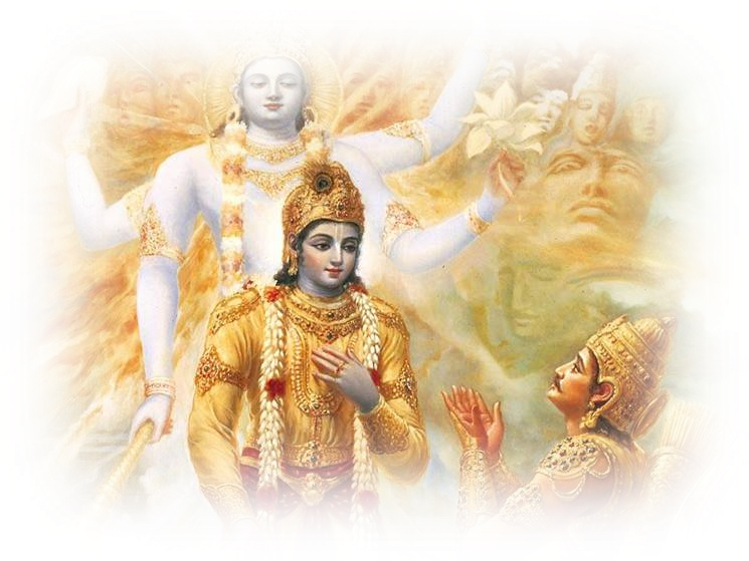
UdyamGita

The Gita Blueprint for Leading and Winning in Business

UdyamGita

Karma Yoga

Chapter 3 - Verse 29,30
प्रकृतेर्गुणसम्मूढा: सज्जन्ते गुणकर्मसु |
तानकृत्स्नविदो मन्दान्कृत्स्नविन्न विचालयेत् || 29||
मयि सर्वाणि कर्माणि संन्यस्याध्यात्मचेतसा |
निराशीर्निर्ममो भूत्वा युध्यस्व विगतज्वर: || 30||

Translation

Ignorant ones, unaware of the distinction in attributes and activities
between the Lord and ordinary souls, get entangled in worldly pleasures
and develop addiction. Learned ones who have proper spiritual knowledge
need not waste time teaching them.

Submit all your activities to Me without ego and without
expectations on the outcome while focusing your mind on Me. Get rid of
your fear of losing near and dear ones and fight this just war.

Unfiltered First Take

Employees in an organization are at different levels of maturity. Someone who has spent decades in a particular subject and has mastered that domain or function is considered an expert. In any organization, there are defined rules, roles, responsibilities, and processes. These help people work in sync, avoid mistakes, and achieve goals smoothly.

Many times, experts, because they have mastered their work, may not strictly follow processes, rules, or regulations. Since the knowledge is deeply ingrained in them, they may still deliver excellent results even without consciously following guidelines. However, they should never discourage others from following rules and processes. Others may not have mastered the work yet, and if they skip processes, they may end up creating errors and damaging outcomes. If such behavior spreads across the organization, it can lead to serious consequences.

Therefore, even if experts do not always rely on processes for themselves, they must respect them and encourage others to follow them. These rules and guidelines exist to support employees at different stages of maturity so they can reach goals smoothly and effectively.

In conclusion, the founder must always keep the organizational goal in mind. He should remain detached from individuals, materials, and the highs and lows of outcomes, understanding that these are all part of entrepreneurship. He should continue working without losing heart or becoming egoistic. By actively working as per his defined role and responsibilities, the founder becomes a role model for everyone in the organization. As long as he holds the role, he has to keep fighting and moving the organization forward.

UdyamGita Interpretation

Krishna makes an important distinction between levels of understanding. Those influenced by the guṇas become deeply attached to actions and their outcomes. The wise, who understand the mechanics of nature and action, must not disturb or confuse those who are still learning. Instead of disengaging, Krishna urges Arjuna to act—offering all work to a higher purpose, free from selfish desire, ego, and emotional agitation.

Wisdom here is not withdrawal—it is steady, composed participation.

Business Insight

Organizations are composed of people at different levels of maturity and mastery.

Some employees are experts—having spent years or decades in a domain. Their skill has become intuitive. They may not consciously follow every documented rule or process, yet still deliver excellent outcomes because the principles are deeply ingrained.

However, this freedom applies only to mastery, not to example-setting.

If experts discourage others from following processes, rules, or systems, chaos follows. Those still learning need structure to avoid errors and align with organizational goals. What works intuitively for an expert can be disastrous when copied by someone still developing competence.

Processes exist not to restrict excellence, but to enable consistency across varied maturity levels.

Leadership Lesson

The founder’s responsibility is to hold the larger picture.

They must remain detached from emotional highs and lows, from personal preferences, from individual brilliance or failure. Entrepreneurship inevitably involves people, materials, systems, and uncertainty. Getting attached to any one of these creates imbalance.

By continuing to act—steadily, visibly, and purposefully—the founder becomes a living role model. Their composure teaches resilience. Their consistency reassures the system. Their persistence keeps the organization moving forward.

Leadership is not about avoiding struggle—it is about fighting with clarity, without inner turbulence.

Key Takeaways

  • Organizations contain multiple maturity levels—systems protect alignment.
  • Experts should never undermine processes meant for learners.
  • Freedom comes after mastery, not before.
  • Founders must stay detached from people, materials, and outcomes.
  • Emotional balance is a leadership responsibility.
  • Consistent action by leaders stabilizes the entire organization.
  • Keep fighting—not with ego or anxiety, but with purpose.

Comments & Reviews

Share Your Thoughts

Comments (0)

No comments yet. Be the first to share your thoughts!

Share this Verse